



Today, one of the major factors contributing to the rising incidence of cancer is the chemicals that enter our food through the excessive use of chemical fertilizers and pesticides. While modern agriculture has helped increase food production, it has also raised concerns about its long-term impact on human health. Given India's large population, it may not be practical for every farmer to completely stop using chemical fertilizers. However, small and meaningful efforts can certainly help reduce this problem. One such inspiring example has emerged from Surat.
This is the story of Kalpesh Patel, a farmer from Saras village in Olpad taluka of Surat district. After losing his father to cancer, he transformed his personal tragedy into a source of inspiration for society. Following his father's death, Kalpesh completely abandoned chemical farming and adopted natural farming practices. Today, he is recognized as one of Gujarat's successful natural farmers.
Kalpesh's father, Ramanbhai Patel, had spent years using chemical fertilizers and pesticides in the fields. According to Kalpesh, his father's body often carried the smell of pesticides. When Ramanbhai was diagnosed with cancer, Kalpesh began to realize the possible health risks associated with prolonged exposure to agricultural chemicals. After his father's passing, he made a firm decision never to use toxic chemicals in farming again.
In 2019, Kalpesh started experimenting with natural farming on his land. Alongside his job as a chemical operator in a private company in Surat, he attended training programs organized by the Gujarat Agriculture Department and learned natural farming techniques such as Jeevamrut.
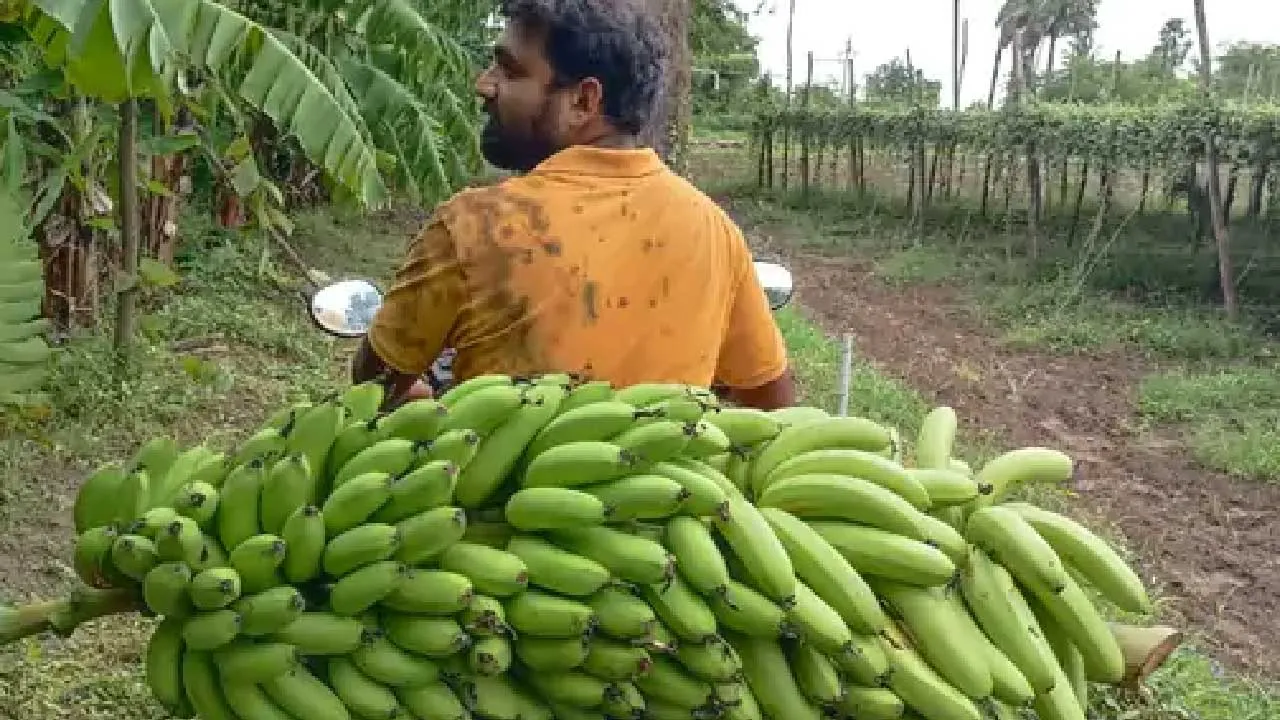
Today, he cultivates more than 50 varieties of bananas on about three and a half bighas of land. These include Poovan, Rasthali, Basrai, Red Banana, Elaichi Banana, and the internationally popular Blue Java variety. The banana bunches produced on his farm typically weigh over 30 kilograms. In 2025, his farm attracted nationwide attention when one banana bunch weighed an impressive 73 kilograms.
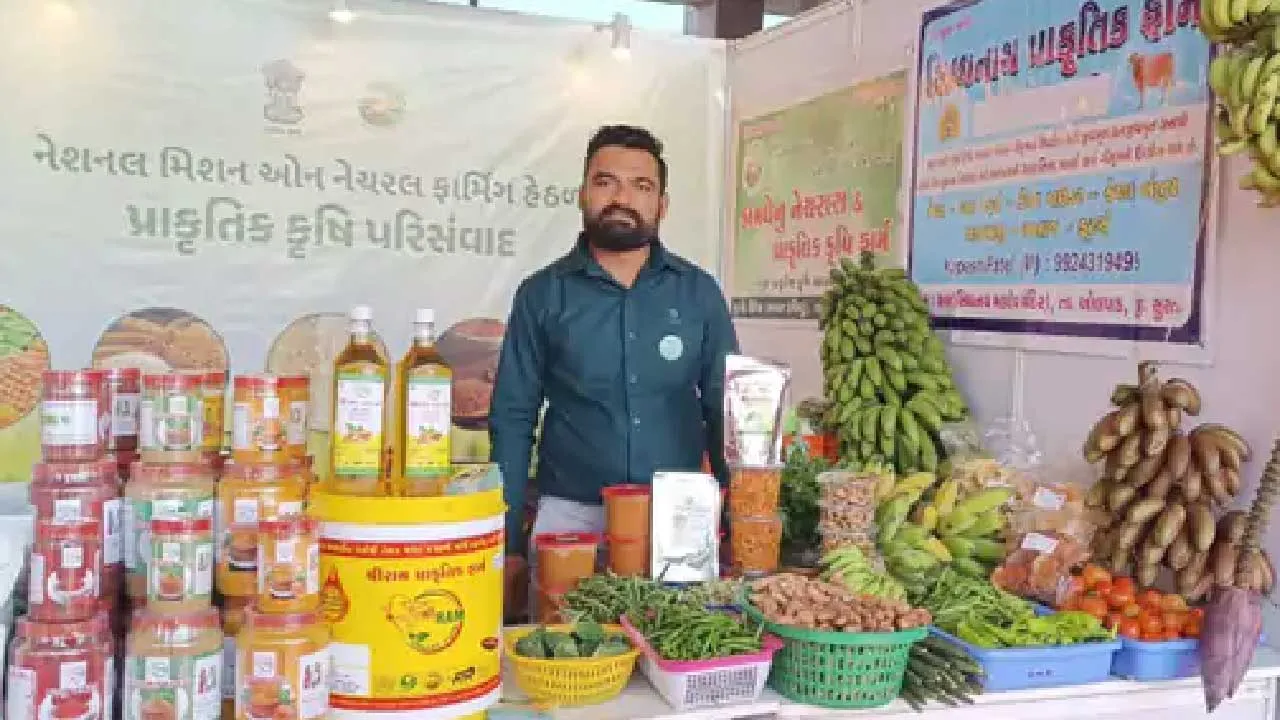
According to Kalpesh Patel, after adopting natural farming, he saves between ₹15,000 and ₹20,000 per bigha every year. As soil quality has improved, productivity has also increased significantly. Today, he earns approximately ₹10 to ₹12 lakh annually from his three-and-a-half bighas of farmland.
To further increase income and reduce waste, he processes unsold bananas into value-added products such as banana wafers, banana powder, and dried banana figs.
Kalpesh Patel's journey is an inspiration for society. He has demonstrated that successful farming does not depend solely on chemical fertilizers. With determination, knowledge, and sustainable practices, farmers can achieve both economic success and environmental responsibility.
About The Author



5.jpg)

4.jpg)

3.jpg)
2.jpg)




1.jpg)




5.jpg)