

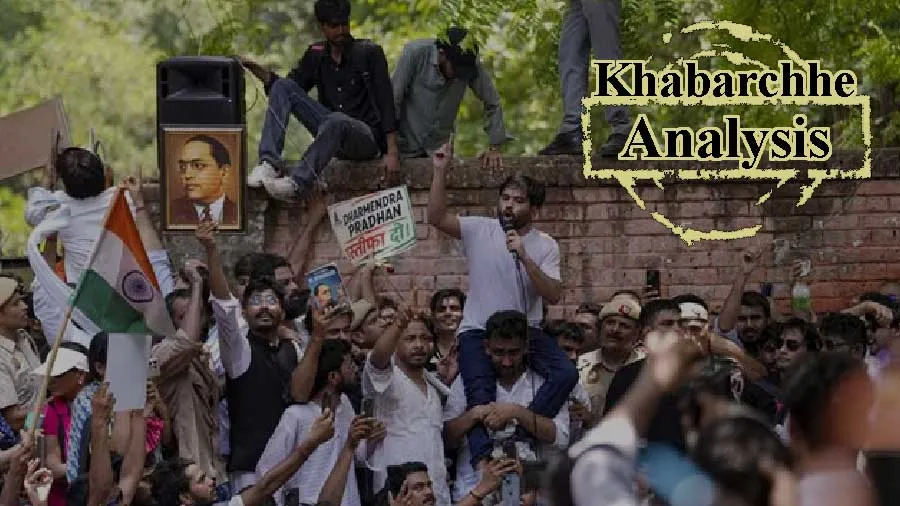
Whenever the youth have taken to the streets in the history of Indian democracy, they have brought about political earthquakes. However, the recent movement sparked by paper leaks and the grace marks controversy surrounding 'NEET' and other competitive examinations such as UGC-NET and CUET stands out significantly from traditional protests. This movement has put not just the educational system, but the credibility of the Central Government, the efficiency of the National Testing Agency (NTA), and the accountability of the Education Minister directly in the dock.
A 'Leaderless' Yet Effective Digital Satyagraha
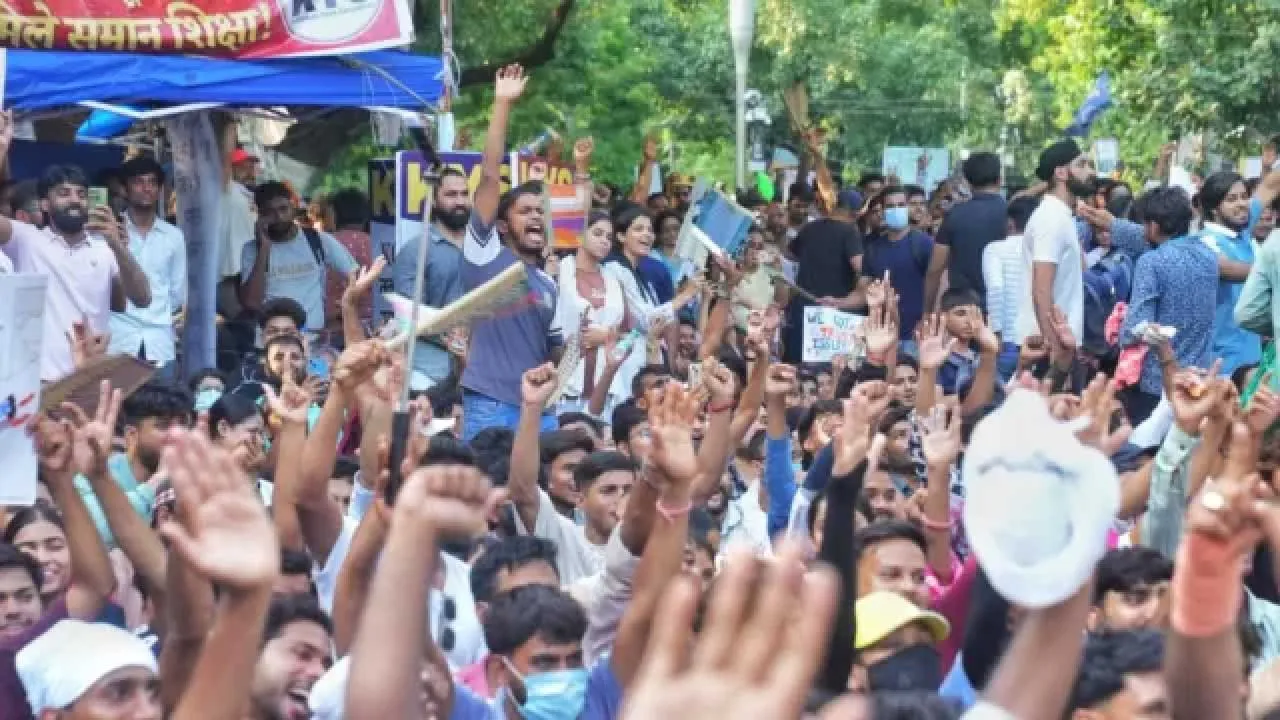
In traditional movements, a specific leader or political party's face leads from the front. But the greatest defining feature of the NEET movement is that it remained spontaneous and decentralized. It has no single specific 'face'; instead, thousands of students across cities like Patna, Delhi, Kolkata, and Kota collectively became the face of this movement.
Social Media Platforms
On Instagram, X/Twitter, and YouTube, the youth amplified their demands and presented their views. Students from ordinary middle-class families—who study day and night for years to prepare—shared their pain, evidence of paper leaks, and viral videos highlighting NTA's negligence. These young faces proved that today's youth are no longer dependent on political party posters or leaders; they are fighting for their rights on their own. This fusion of digital and ground-level protest became a force that proved impossible for politicians and the government to suppress.
18.jpg)
Resignation of the Education Minister: Whose Responsibility?
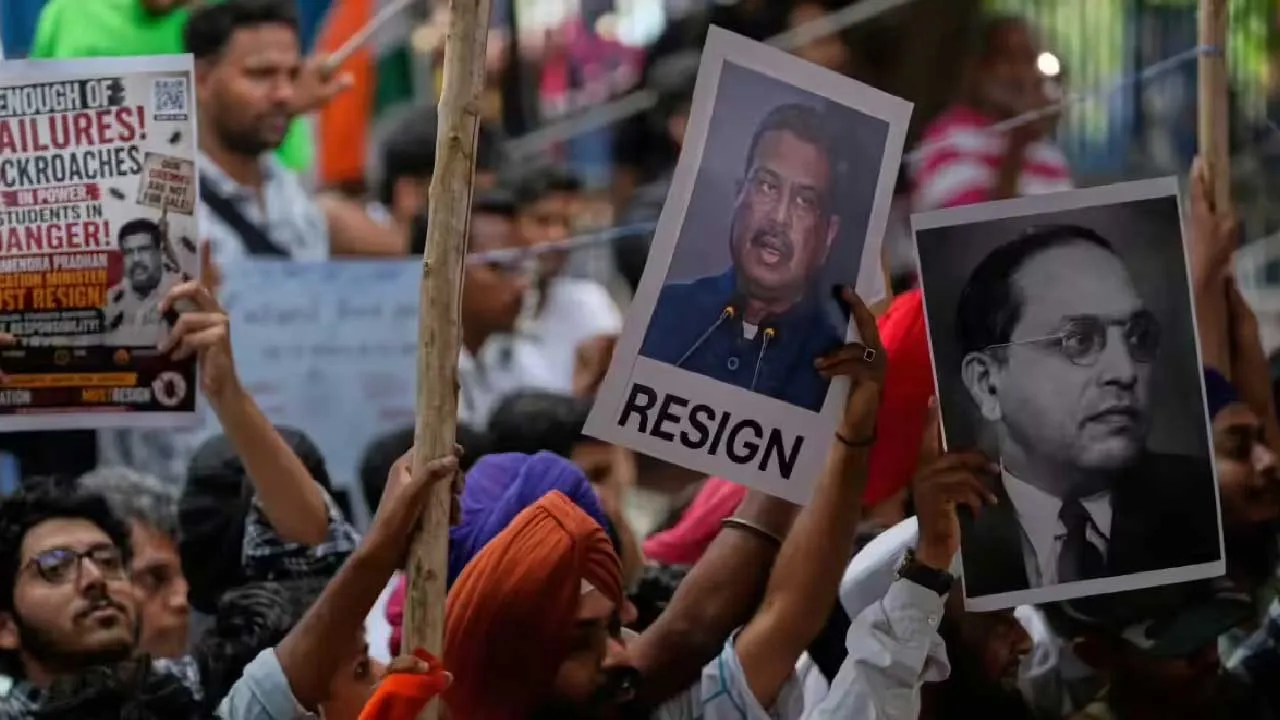
The most impactful demand of this movement was the resignation of Union Education Minister Dharmendra Pradhan. The argument from students and opposition parties was that as the head of the country's education and examination system, the ultimate and complete responsibility lies with the Minister. When an institution like the NTA repeatedly fails, when the paper leak mafia operates fearlessly, and when the future of millions of students is pushed into darkness, holding the ministerial position on moral grounds is untenable.
The opposition parties surrounded the government on this issue in both houses of Parliament. Students organized silent sit-ins and hunger strikes ranging from Delhi's Jantar Mantar to Rajghat. The government responded with orders for a CBI investigation and replaced the head of the NTA, but the youth remained adamant that "as long as the Minister remains in office, reform in the system is impossible." The protesting youth stood firm on their demand, and ultimately, the country's Education Minister, Dharmendra Pradhan, had to resign, forcing the government to yield.
From the perspective of political analysts, the demand for the Education Minister's resignation was not merely about removing an individual, but an attempt to demand clarity of accountability. For the current government, this was a deeply embarrassing political situation as its claims of 'good governance' and 'transparency' were proven hollow in front of the youth.
The NEET movement has set a new precedent in India's political and social framework. Let us understand the possibilities and impacts of such movements in the coming times:
- The Era of Issue-Based Politics: The youth will no longer remain a vote bank swayed solely by religion, caste, or regional identity. Employment, merit, and transparency are issues directly tied to the emotions of young people. In upcoming elections, young voters will favor candidates who guarantee a 'paper-leak-free' system and 'employment'. It will be difficult for any government to ignore this anger among the youth.
2. Rethinking the 'One Nation, One Exam' Policy: The government's 'One Nation, One Exam' policy (NEET, CUET, JEE, SSC) now finds itself under a cloud of suspicion and questioning. In the future, any irregularity in a central examination will trigger an immediate nationwide protest. The youth will no longer hesitate to protest against state or central governments.
3. Demands for Legal Reforms and Strict Punishment: Future movements will not remain confined to the streets; they will demand judicial intervention and legal reforms. While states like Bihar and Uttar Pradesh have enacted strict laws against paper leaks, the youth will now demand stringent central-level legislation treating 'paper leakers' and 'coaching mafias' with penalties as severe as treason.
4. Use of Social Media and AI: Digital footprints will be far stronger in future movements. The youth will utilize AI and data analysis to gather evidence of government oversights or failures. Whether the government's IT Cell can withstand the digital satyagraha of the youth is also a open question, given that the youth possess real-time data and ground reality.
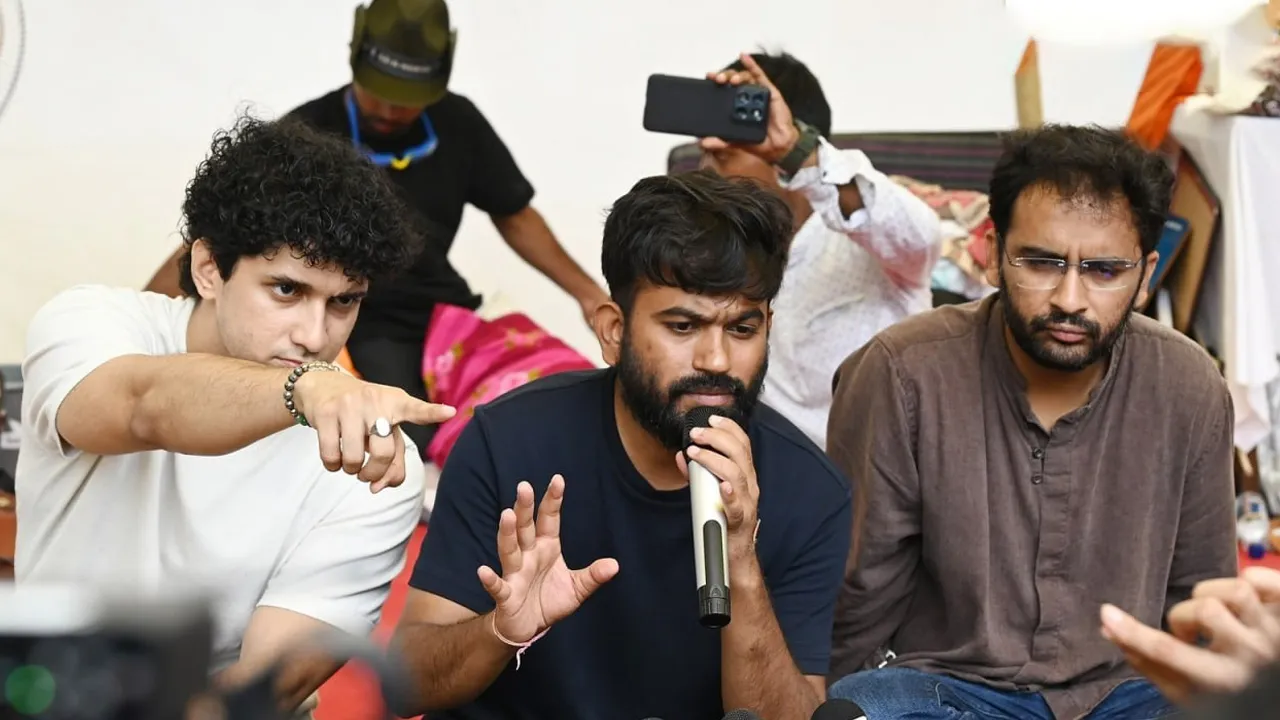
In conclusion, the NEET movement is a warning. It serves as a reminder to the ruling powers that India's youth is no longer an 'inanimate voter'—they are aware, they ask questions, and they demand accountability. If the government fails to take the faces and demands of the youth student movement seriously and does not implement swift, fundamental reforms in the system, difficult times lie ahead. In the future, even a minor mistake in recruitment exams like SSC, Railways, Banking, or others could spark a massive uprising. The true strength of a democracy lies not in authority, but in this young generation that dares to question authority. Rather than treating protests as a law-and-order problem, the government must view them as an opportunity for constructive, dialogue-driven nation-building.
About The Author


.jpg)

1.jpg)

.jpg)





5.jpg)

4.jpg)

.jpg)

1.jpg)