


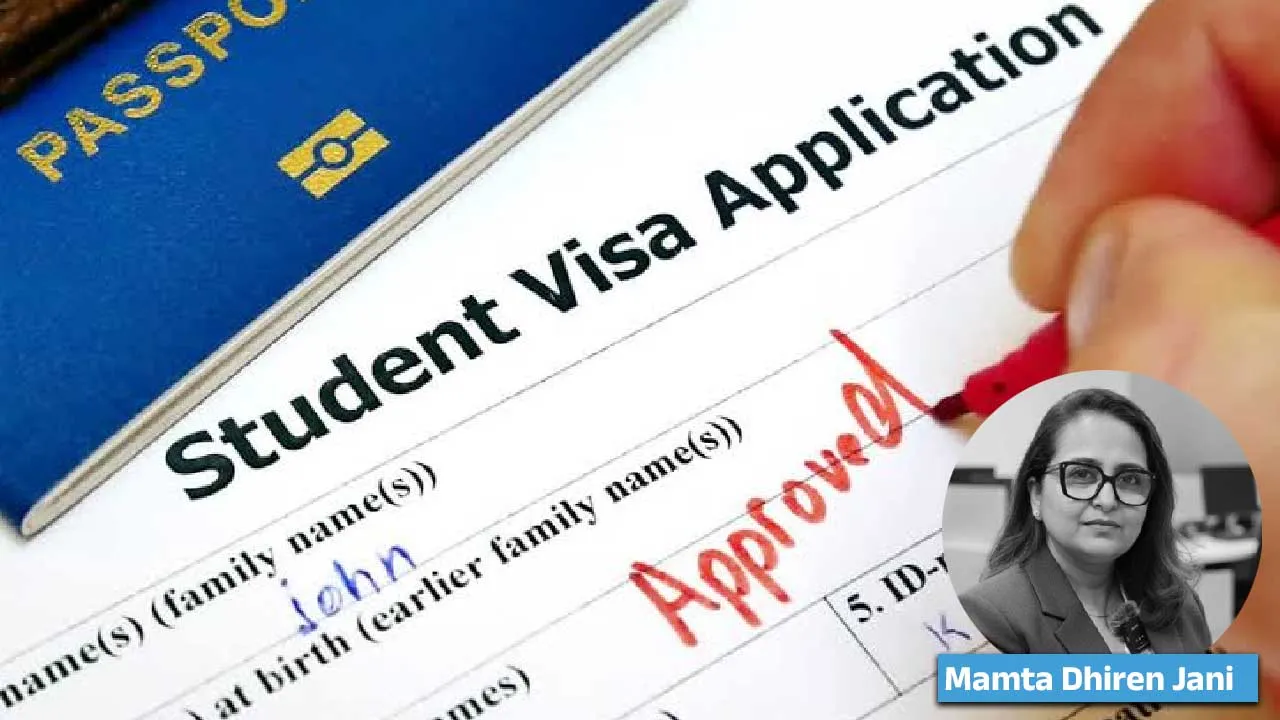
In counselling rooms across the city, the question has changed. Two or three years ago, families asked which country was best. Today, many ask whether it is worth applying at all.The anxiety has a basis. About 12.54 lakh Indian students were studying abroad in 2025, and the number fell 5.7 per cent that year, the first such dip in years, according to figures attributed to the Ministry of External Affairs. Almost every major destination has made the path harder in its own way.
Canada, long the first choice of Indian students, has capped permits. Its 2026 to 2028 plan allows up to 408,000 study permits, but only 155,000 are for newly arriving students; the rest are extensions. Indian entries fell from 188,125 in 2024 to just 28,350 in the early months of 2026, and the closure of the Student Direct Stream, which once speeded up processing, has made applications slower and less predictable. A Reuters report cited by an Indian current-affairs digest put the rejection rate for Indian study-permit applications at 74 per cent in August 2025.
In the United States, the shock came at the visa counter. Only 12,776 F-1 student visas were issued to Indians in June and July 2025, against 41,336 a year earlier, a fall of 69 per cent, after interviews were paused and applicants were told to make their social media accounts public and list every username used in five years. The government has told Parliament that Indian student numbers in the US fell 6.9 per cent in a year, from 378,787 to 352,644.
The United Kingdom has not shut its doors; student visa applications actually rose 7 per cent in 2025. But from 1 January 2027, the Graduate Route will give most bachelor's and master's graduates 18 months instead of two years. Australia has set a 2026 planning level of 295,000 new students, still 8 per cent below its post-COVID peak, and has moved India to Evidence Level 3, its strictest tier, meaning heavier financial and academic proof.
It is a matter of just things moving at the right time at the right pace. The path could have become a little longer. That doesn’t mean you stop the journey. Stay positive and work hard, and keep working toward their careers.Students who prepare in the right manner and whose applications are genuine should be able to get their visas and can go on to build strong careers in whichever country they choose.

Let the rules tighten: aim for the 10 per cent
Every country is raising the bar. Let them. Even if the chance of approval falls to 10 per cent,students will be eligible and to be inside that 10 per cent.
It is not a promise of results; no counsellor can give one, and officers decide each case on its merits. It is a method. Tighter rules reward preparation, and the applicants who clear a stricter system are usually those who meet every requirement, can show where their money comes from, apply with a clear course and career reason, and submit documents that agree with each other. A 10 per cent window is narrow, but it is not random.
What “prepared” looks like
Reports on visa refusals keep pointing to the same weak spots: large unexplained deposits, cash-heavy accounts with round-figure entries, and funds that look out of line with a family's declared background or rely on unexplained third parties.
The remedy is unglamorous. Families should be able to trace the source of every large amount, keep income papers such as tax returns and bank statements telling one consistent story, avoid last-minute lump sums, and start early enough to leave room for tests, the statement of purpose and paperwork. Students should choose the course first and the country second.

Where doors are opening
Not every destination is narrowing. Germany recorded 69,816 Indian students in the winter semester 2025/26, a record and 17.5 per cent more than a year earlier, making Indians its largest international group, though the same reporting warns of debt and visa risks in some private and hybrid programmes.
Japan hosted only 1,685 Indian students in 2024, but its total international enrolment hit a record 408,069 in May 2025, and it has spoken of raising Indian numbers to around 5,000 through scholarships. For students whose profile fits, such options keep the journey going when one road narrows.
A longer road, still a road
The headline numbers will keep families anxious for some time. My counterweight is simple: the road is longer, but the destination has not moved. Students who stay committed, prepare honestly and stay flexible can still build careers wherever they land.
About The Author